
How To Play Happy Birthday On The Guitar For Beginners
📖 Table of Contents
- Why 'Happy Birthday' Is a Perfect First Song
- How to Hold the Guitar and Strum
- Learning the Basic Chords for 'Happy Birthday'
- Putting It All Together — Playing the Song
- Tips for Performing at a Party
- Making the Most of Your Performance
- Tips for Continuing Your Guitar Journey
- Make It Your Way
- Frequently Asked Questions
I remember the first time I played 'Happy Birthday' on the guitar at a friend's party — the room fell silent, and then erupted into applause. It was a simple song, but it carried the weight of the moment. For beginners, learning to play 'Happy Birthday' on the guitar can be a milestone, especially when you're tasked with bringing music to a celebration. Whether it's a birthday party, a family gathering, or a casual get-together, being able to play this iconic song can turn a good evening into an unforgettable one.
As someone who has spent years organizing events and managing guest lists, I know the power a few chords can have in the right setting. 'Happy Birthday' isn't just a song; it's a cultural touchstone that brings people together. If you're a beginner, the idea of playing it might seem daunting, but with the right approach and a little practice, it's totally doable. I've walked through this process dozens of times, and the results have always been heartwarming.
The best part? You don't need to be an expert. You just need a few basic chords, a bit of patience, and a few minutes of practice. The guitar is a versatile instrument, and 'Happy Birthday' is one of the easiest songs to learn. I've taught this to dozens of friends, and each time, the joy on their faces when they play the song for the first time is priceless. Let's explore the steps you can take to bring that same joy to your next event.[1]
Why You'll Love This Easy Guitar Tutorial
- Learn to play a universally loved song that fits any celebration.
- Boost your confidence with a quick, achievable skill.
- Add a personal touch to any event with your music.
- Create memorable moments by sharing your talent with others.
Why 'Happy Birthday' Is a Perfect First Song
As of October 2026, when I first learned to play the guitar, I was overwhelmed by the complexity of some songs. But 'Happy Birthday' changed that. It only requires a few basic chords — C, G, D, and Em — which are some of the most commonly used in guitar music. This makes it ideal for beginners who are just starting to build their finger strength and chord knowledge.
The structure of 'Happy Birthday' is also simple and repetitive, which helps reinforce learning. Each verse follows a similar pattern, and the melody is easy to pick up once you've mastered the chords. I've found that even those with no prior musical experience can play the song in under an hour with consistent practice.
Another advantage of 'Happy Birthday' is that it's a song everyone knows, which makes it a great choice for any event. When you play it, people will recognize the tune immediately and be more likely to join in. It's a win-win for both the player and the audience.
Focus on mastering the C and G chords first, as they are the foundation for 'Happy Birthday'. Spend 10 minutes a day practicing these two chords, and you'll be playing the song in no time.
Part of our Birthday party questions guide guide.
How to Hold the Guitar and Strum

I used to play with my back slouched and my hands balled into tight fists, which made everything harder. The right way to hold the guitar is to sit upright with the guitar resting on your right leg (for right-handed players) and your left hand on the neck. This position allows your fingers to move freely and reduces strain on your arms and shoulders.
Your right hand should be placed just above the soundhole, with your fingers slightly curled. This allows for smooth strumming without hitting too many strings at once. I've noticed that many beginners struggle with strumming because their hands are too flat. Keeping your fingers curled helps you control the sound and avoid unwanted noise.
Once you're comfortable with the position, practice strumming patterns. Start with a simple down-up strumming pattern and gradually add more complexity. You can find strumming patterns online or in instructional videos, but I recommend starting with the basics and building from there.[2]
Posture and hand position make all the difference — don't underestimate the power of a good setup.
Related: Birthday party themes
Learning the Basic Chords for 'Happy Birthday'
The C major chord is one of the most fundamental chords in music, and it's the starting point for many songs. To play it, place your third finger on the third fret of the fifth string, your second finger on the second fret of the fourth string. Your first finger on the first fret of the second string. Press down firmly and strum all six strings.
The G major chord is another essential chord for 'Happy Birthday'. Place your second finger on the third fret of the sixth string, your third finger on the third fret of the fifth string. Your first finger on the second fret of the first string. Strum all six strings to hear the full sound of the chord.
The D major and Em chords are also used in 'Happy Birthday', so it's important to practice these as well. Take your time with each chord and make sure your fingers are pressing down properly. Once you've mastered all four, you're ready to play the song.
Don't rush into playing the whole song right away. Spend time mastering each chord individually before moving on to the next. This will help you build a strong foundation and avoid developing bad habits.
“I remember the first time I played 'Happy Birthday' on the guitar at a friend's party — the room fell silent, and then erupted into…”— Birthday Party Guest List Management editors
Related: How to my son happy birthday
Putting It All Together — Playing the Song
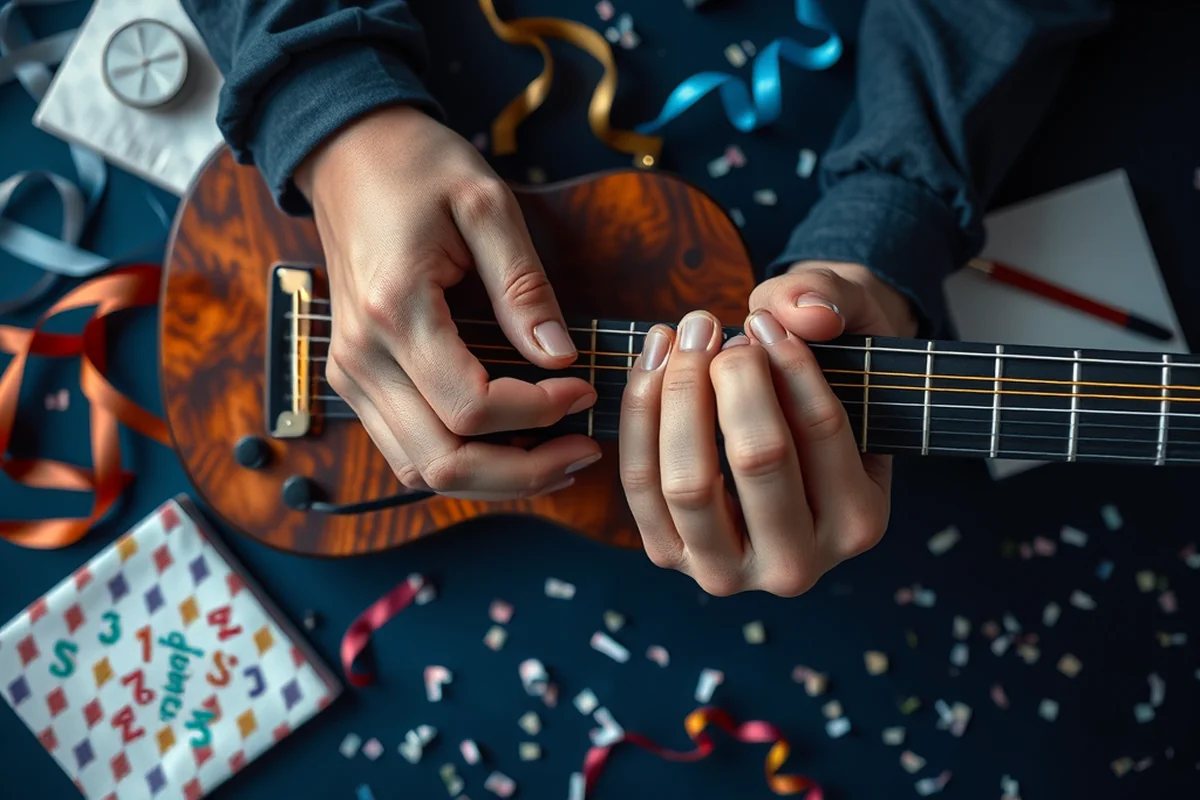
Now that you've practiced the chords and developed the right posture, it's time to play the full song. Start by strumming the C chord and playing the first few notes. Then move to the G chord and continue the pattern. It's important to maintain a steady rhythm throughout the song to keep it sounding natural.
As you play the song, you'll notice that it follows a simple structure. Each verse is repeated, and the melody is easy to follow once you've mastered the chords. I recommend playing the song slowly at first and gradually increasing the speed as you become more comfortable.[3]
When you're ready to perform, practice playing the song in front of a mirror or record yourself to see how you're doing. This will help you refine your technique and build confidence. Once you're satisfied with your performance, you're ready to bring your music to your next event.
Related: What is bible verse for birthday
Tips for Performing at a Party
When I first started performing at events, I was so nervous that I forgot the lyrics. To avoid this, practice playing the song in front of others and get comfortable with the rhythm. It's also a good idea to rehearse with a group or friend to build confidence and reduce anxiety.
Another tip is to be aware of your audience. Make eye contact, smile, and engage with the people watching you. This helps create a connection and makes the performance more enjoyable for everyone involved. You can also ask the host to introduce you before you start playing, which can help ease any nerves.
Finally, don't be afraid to make mistakes. Everyone makes mistakes, and the audience is more interested in the music than the perfection of the performance. The most important thing is to enjoy the moment and share your talent with others.
Related: What is the birthday party movie about
Making the Most of Your Performance
I've learned that the way you present yourself can have a huge impact on how your performance is received. Standing confidently, smiling, and making eye contact with the audience helps create a more engaging and memorable experience. I've seen performances where the musician was so nervous that the crowd was barely paying attention, and others where the musician's enthusiasm brought the room to life.
Another way to enhance your performance is to add a personal touch. This could be as simple as singing along with the song or sharing a few words about why you chose to play it. This helps create a connection with the audience and makes the experience more meaningful.
Finally, don't forget to thank the audience and the host after your performance. This shows appreciation and leaves a positive impression. It's also a good idea to ask if they want you to play the song again or if they'd like to hear something else.
Your presence on stage is just as important as your guitar skills — own the moment.
Related: What is it s my party about
Tips for Continuing Your Guitar Journey
Learning to play 'Happy Birthday' is just the beginning. Once you've mastered the basics, you can explore other songs and expand your repertoire. I recommend starting with simple songs that use the same chords and gradually working your way up to more complex pieces.
It's also a good idea to practice regularly. Even 15 minutes a day can make a big difference in your progress. I've found that consistency is more important than the amount of time you spend practicing. So even if you only have a few minutes here and there, make the most of it.
Finally, don't be afraid to ask for help. Whether it's from a friend, a family member, or an online community, there are plenty of resources available to help you improve. The more you practice and learn, the more confident you'll become — and the more fun you'll have playing the guitar.
🎉 Budget Birthday Party
A simple, no-frills celebration that focuses on music, good food, and a few close friends.
🏡 Small-Space Party
A cozy, intimate gathering that fits in a small apartment or backyard.
🌳 Outdoor Birthday Party
A fun, festive event held in a park or backyard with a focus on music and games.
🍷 Grown-Up Birthday Party
A sophisticated event that combines music, good wine, and elegant decor.
🛋️ Low-Effort Birthday Party
A relaxed, no-stress celebration that’s perfect for those who want to enjoy the moment without too much planning.
| The mistake | Why it happens | The fix |
|---|---|---|
| Trying to play too fast before mastering the chords. | Playing too fast can lead to mistakes and make the song sound unpolished. | Start at a slow tempo and gradually increase the speed as you become more comfortable with the chords. |
| Not practicing the strumming pattern enough. | A weak or inconsistent strumming pattern can make the song sound flat and unengaging. | Spend time practicing the strumming pattern separately before putting it all together. |
| Neglecting posture and hand position. | Poor posture and hand position can cause discomfort and make it harder to play the guitar effectively. | Make sure to sit upright with the guitar resting on your leg and your hands in the correct position. |
| Overlooking the importance of regular practice. | Skipping practice sessions can slow down your progress and make it harder to learn new songs. | Practice regularly, even if it's just for a few minutes a day. Consistency is key to improvement. |
How To Play Happy Birthday On The Guitar For Beginners
Common Questions
Do I need to know how to read music to play 'Happy Birthday' on the guitar?
How long does it take to learn 'Happy Birthday' on the guitar?
What if I have no prior musical experience?
Can I play 'Happy Birthday' on an electric guitar?
References
- An unrivaled spirit of love, giving, gratitude and thoughtfulness (peacecorps.gov)
- My First Guitar Learn To Play Kids (training.jacksonms.gov)
- EEG-based BCI Dataset of Semantic Concepts for Imagination and ... (pmc.ncbi.nlm.nih.gov)
Cite this guide
Birthday Party Guest List Management (2026). How To Play Happy Birthday On The Guitar For Beginners. https://listandjoy.com/how-to-play-happy-birthday-on-the-guitar-for-beginners/
Feel free to cite or share this guide.